


In wire drawing, the lubricant does two jobs at once: it cools the wire and the dies, and it reduces friction in the die. But every die pass also produces fine metal particles that end up in the drawing oil or emulsion. Without effective filtration, the lubricant gets thicker and dirtier until it has to be replaced. This article explains why wire drawing lubricants are hard to filter, compares the common filtration methods, and shows how a centrifugal separator keeps drawing oil clean for years.
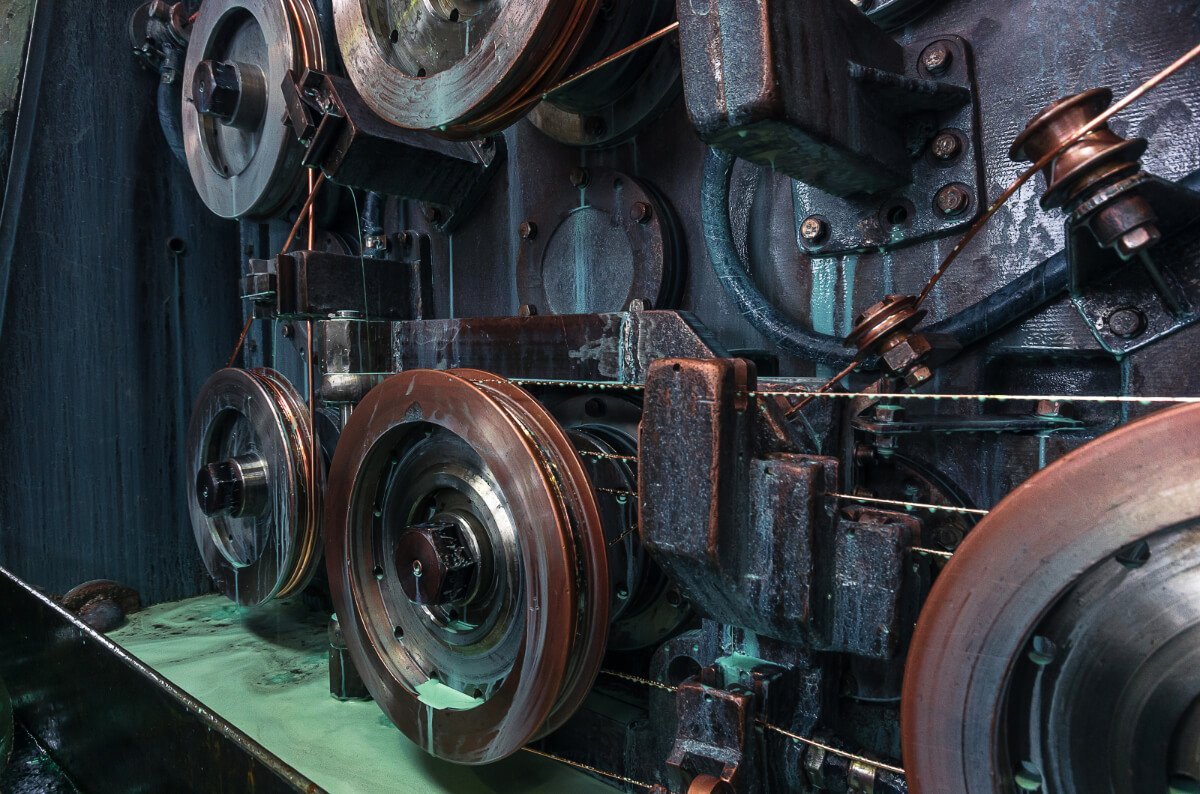
Why wire drawing lubricants get dirty
- Metal fines: drawing copper and especially aluminium creates very fine abrasion particles, often between 1 and 20 µm.
- Soap and additive residues from the lubricant and from previous processes.
- Oxides and dirt carried in on the wire rod.
These particles do not stay in suspension harmlessly. They increase the viscosity of drawing oil, scratch the wire surface, accelerate die wear and form sludge in tanks and pipes.
What dirty lubricant costs you
- More die wear and more frequent die changes
- Surface defects on the wire and lower product quality
- Frequent oil or emulsion changes, each with machine cleaning and lost production time
- Waste disposal of large volumes of used oil as special waste
Wire drawing filtration methods compared
Settling tanks
Simple and cheap, but very fine particles settle extremely slowly – in high-viscosity drawing oil, natural sedimentation can take months.
Paper band filters, bag and cartridge filters
Common for drawing emulsions. They need constant consumables and struggle with very fine particles and high-viscosity oils, where the filter media clog quickly.
Centrifugal separators
A centrifugal separator spins the lubricant in a drum at around 2,000 x g. Even the finest metal particles are pressed against the drum wall and removed as a compact sludge with very little oil left in it. Because there is no filter media, viscosity is not a problem and there are no consumables. Running in bypass, the separator keeps the lubricant at a constant level of cleanliness.
Aluminium wire drawing: a case study
Nexans, a world leader in cable production, draws aluminium and copper wire on three NIEHOFF drawing lines at its plant in Dour, Belgium. The wire and dies run fully immersed in high-viscosity drawing oil – around 3,000 litres per machine.
Within 8 to 12 months, the fine aluminium particles (1–20 µm) built up to as much as 30 % of the oil volume. The viscosity rose from 650 to over 1,000 cSt, and all 9,000 litres had to be changed and disposed of as special waste. Standard filtration was not possible because of the high viscosity and the very small particles.
Nexans installed one STA A-25 centrifugal separator with automatic sludge discharge, connected to all three drawing lines. The results:
- The oil has not needed changing since start-up – only top-ups. An oil change is now planned only once every 2 years.
- Savings of about 4,500 litres of oil per year (around €7,500)
- About €4,000 per year saved on waste oil disposal and machine cleaning
- 9 extra production days per year (3 days per machine)
- Better wire quality and significantly less die wear
Read the full case study: Wire drawing.
Copper and aluminium wire drawing in Thailand
E&W Industrial Service Asia supplies STA centrifugal separators for drawing oils and emulsions in Thailand and Southeast Asia, from the compact U-15 for single machines to the fully automatic A-25 for several lines. We can test a sample of your lubricant and provide trial units.
Need to clean the wire itself after drawing? See our inline wire and cable cleaning systems on ewins.asia.
Contact us to discuss your drawing line, or see all STA centrifugal separators.
